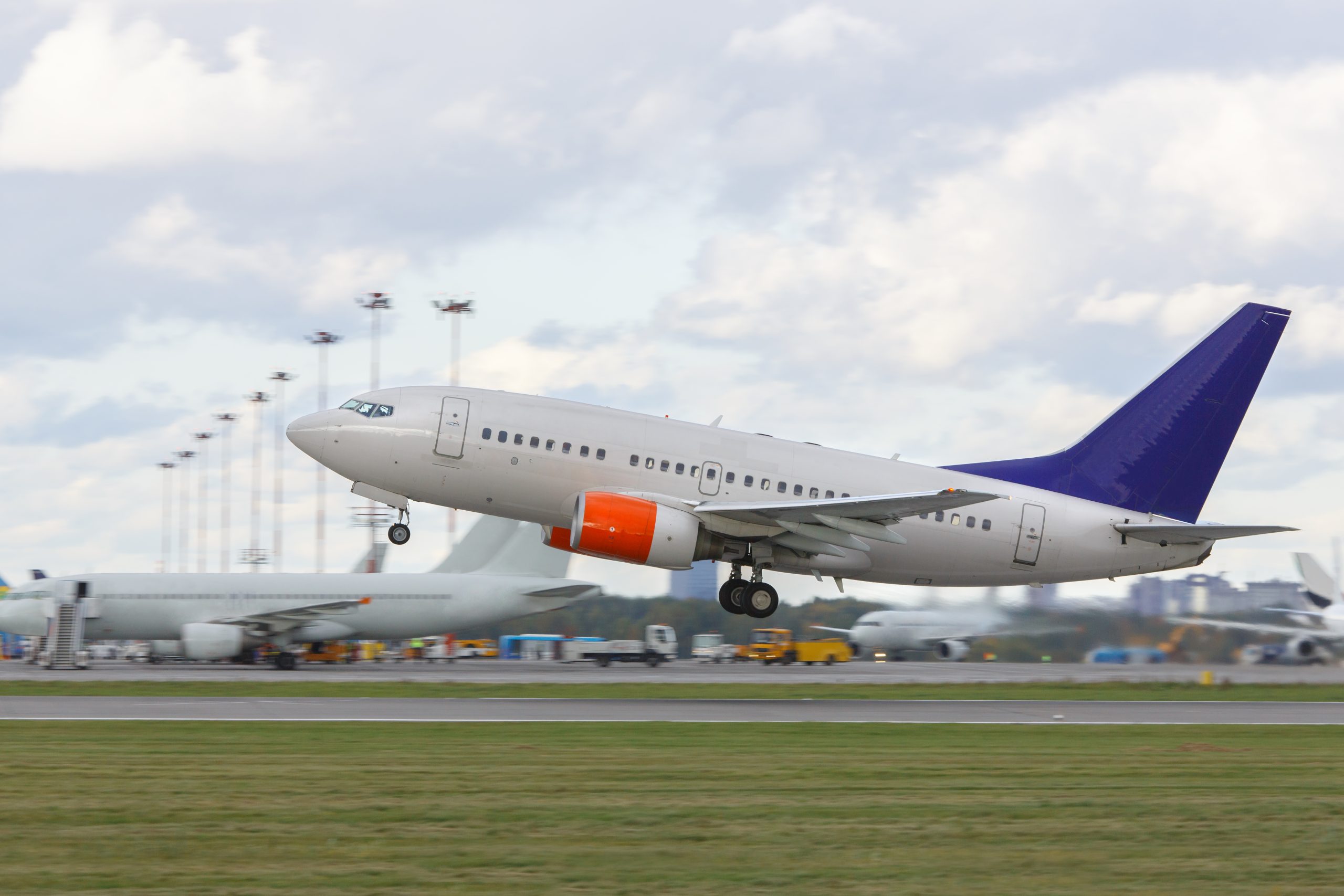
Amsterdam Airport Schiphol (IATA: AMS) is one of those airports that genuinely rewards knowing it well. It is the main international gateway of the Netherlands and one of the busiest aviation hubs in the European Union, consistently ranking among the world’s leading airports by international passenger traffic. In 2024, it handled over 60 million passengers — of whom more than 24 million were recorded as transfer travellers, representing roughly 12 million unique connecting passengers, each counted twice as they pass through both arrival and departure.
Whether you are arriving, departing, or connecting, understanding how Schiphol works makes the difference between a smooth experience and a frustrating one. This guide covers the airport’s layout, its history, its remarkable facilities, its quirks — and how professional VIP assistance can make your time there genuinely effortless.
A Surprising History: Built on the Bottom of a Lake
Schiphol’s story begins in an unusual place — literally. The airport sits more than four metres below sea level, built on the drained bed of the Haarlemmermeer, a large lake that was pumped dry in 1852. The name ‘Schiphol’ itself dates back to the 15th century, when the area was still water: ‘schip’ (ship) and ‘hol’ (hole or hollow) — a reference to the shallow waters where boats were built.
The first aircraft landed at Schiphol in September 1916, when it served as a military airfield. Civil aviation followed on 17 May 1920, when the very first KLM flight arrived from London — a De Havilland DH-16 flown by pilot Jerry Shaw. The United Kingdom has remained the most popular leisure destination from Schiphol ever since.
The airport was largely destroyed during the Second World War — occupied by German forces in 1940 and renamed Fliegerhorst Schiphol, it suffered heavy bombing before liberation. Remarkably, the first post-war passenger flight landed there on 8 July 1945, just weeks after the war ended. Schiphol has never relocated from its original site — making it one of the oldest airports in the world to remain on the same ground it started on.
In 1967, Queen Juliana opened the new Schiphol-Centrum, designed by architect Jan Dellaert. His vision — a central terminal encircled by piers — was a genuine world first. Most of what he built, particularly Departure Halls 1 and 2 and parts of Piers C, D, and E, is still in use today, more than half a century later. In 2016, on its 100th anniversary, the airport received a royal seal from King Willem-Alexander, earning the right to call itself Royal Schiphol Group.
Understanding the Layout: One Terminal, Eight Piers, and a Few Surprises
Schiphol operates on a single-terminal concept — a design principle that, in theory, means you never have to leave one building or take a shuttle between terminals. In practice, the terminal is enormous: it covers around 650,000 square metres, splits into three departure halls, and connects to eight piers designated by letters: B, C, D, E, F, G, H, and M.
The ground floor houses the arrivals halls and Schiphol Plaza — the large pre-security shopping centre open to both passengers and visitors. Check-in desks and the three departure halls are on the first floor, from which passengers proceed to security and, for non-Schengen flights, passport control.
The Three Departure Halls and Their Piers
Departure Hall 1 covers Piers B, C, and part of D. Pier B has 14 gates, Pier C has 21. This hall has recently been renovated, with expanded security checkpoints and improved waiting areas.
Departure Hall 2 shares Pier D with Hall 1 and also houses Pier E. Pier D is the largest concourse at Schiphol, spread across two levels: the upper level for non-Schengen flights (Gates D1–D57), connected to the passport control zone, and the lower level for Schengen destinations (Gates D59–D87), connected directly to the Schengen airside.
Departure Hall 3 is a strictly non-Schengen zone and connects to Piers F, G, and H. Pier F serves SkyTeam alliance airlines on non-Schengen routes. Pier G houses 13 gates for non-Schengen flights. Pier H handles low-cost non-Schengen carriers. Pier M — the Schengen low-cost pier used primarily by EasyJet and Ryanair — has its own dedicated departure zone (sometimes referred to as Departure 4 / Lounge 4) with its own separate security filter, and is not accessible via Hall 3.
The H and M Pier Exception — A Detail That Matters
Here is the one piece of Schiphol’s layout that regularly catches passengers off guard: Piers H and M form a separate low-cost zone with limited connectivity to the rest of the terminal airside. Security at Schiphol is centralised — passengers pass through the same shared checkpoints in their respective departure hall. The practical constraint appears at the automated access gates at the entrance to Pier H or M itself: once you scan your boarding pass at those turnstiles, you are effectively isolated from the other piers, and for most connection scenarios you will need to exit to the landside and pass through security again. If you are on a low-cost carrier using these piers, plan accordingly — and transit passengers connecting to or from a mainline carrier at another pier should allow significant extra time and verify their specific routing with the airline in advance.
The Polderbaan Runway
Schiphol has six runways in total, arranged around the terminal in what is called a tangential runway system — designed so that no matter which direction the wind blows (a real consideration in the Netherlands), planes can safely take off and land. The sixth runway, the Polderbaan, was completed in 2003 and sits far to the west of the terminal, separated from the main airport area by the A5 motorway, which is crossed by a dedicated taxiway bridge. Taxiing to or from the Polderbaan takes between 10 and 20 minutes, which is worth knowing if you are on a tight connection.
World Firsts: The Things Only Schiphol Does
Schiphol is not just large — it is genuinely one of the most culturally distinctive airports in the world, with a string of global firsts that set it apart.
The World’s First Airport Art Museum
In December 2002, Prince Willem-Alexander (now King) opened a branch of the Rijksmuseum inside the terminal — making Schiphol the first airport in the world to house a national museum. The gallery sits on Holland Boulevard, the corridor between Piers E and F in the non-Schengen zone, and is open 24 hours a day, free of charge. At any given time, around 10 original paintings are on display, rotating from the Rijksmuseum’s collection and themed around travel, Dutch history, and art. Previous exhibitions have included original works by Rembrandt and other Dutch Golden Age masters. The space is small — designed to hold around 100 visitors — and a visit typically takes 15 to 20 minutes. There is no other airport in the world where you can stand before original 17th-century Dutch masters during a layover.
The World’s First Airport Library
In 2010, Schiphol opened the world’s first airport library on Holland Boulevard, adjacent to the Rijksmuseum branch. The library offers around 1,200 books in 29 languages — Dutch, English, Spanish, Chinese, and more — along with music and films available for free download. It has been featured in The New York Times and has attracted over 1.25 million visitors since opening. It has since inspired similar library amenities at airports around the world.
Holland Boulevard
Holland Boulevard is the corridor connecting Piers E, F, and G in the non-Schengen transit zone — and it functions as a curated showcase of Dutch culture. Beyond the museum and library, the boulevard features a grand piano available for any passenger to play, an indoor city park, and numerous food and beverage options. Elsewhere in the terminal, the Airport Park in Lounge 1 (Schengen zone, near Pier D) offers a remarkable indoor green space complete with real trees, birdsong, and exercise bikes that generate electricity to charge devices. It is, by some distance, the most culturally rich airport terminal in Europe.
The Panorama Terrace
On the roof of Departure Hall 2, the Panorama Terrace offers a viewing platform overlooking the runways — one of Europe’s few remaining outdoor plane-spotting terraces at a major hub airport. On the terrace stands a genuine Fokker 100 jet, formerly operated by KLM CityHopper, open to visitors: you can sit in the cockpit, explore the baggage hold, and hear real air traffic control communications. The terrace and aircraft are free to visit.
Getting to and from Schiphol
One of Schiphol’s most significant practical advantages is its transport connectivity. A major intercity railway station sits directly beneath the terminal building, with platforms accessible from Schiphol Plaza. Direct trains run 24 hours a day to Amsterdam Centraal (approximately 17 minutes), and regular services connect to Utrecht, The Hague, Rotterdam, and most other major Dutch cities — as well as international connections to Brussels and Paris via Eurostar.
The train station opened in 1978, and since 1980 the rail connection has been central to Schiphol’s identity as a transit hub. It remains one of the best-integrated airport rail connections in Europe.
For those arriving by road, P1 Parking sits directly opposite the terminal and is designed for short stays — tariffs increase significantly for longer periods. P3 Long Term Parking (sheltered and unsheltered options) offers a complimentary shuttle service for longer stays. Taxis, rideshares, and the Connexxion airport bus service to central Amsterdam are available from the ground transportation level.
Practical Navigation: What Every Passenger Should Know
Schiphol is generally well-signposted — Dutch designer Benno Wissing created the original wayfinding system in 1967, with a strict colour-coding scheme built around yellow backgrounds and black text. This combination, which entered design textbooks as a benchmark for airport wayfinding, was protected: no other signage in the terminal was permitted to use the same yellow. The current wayfinding was redesigned in 1993 by Paul Mijksenaar and remains clear by the standards of major hub airports.
That said, a few practical realities are worth noting:
- Walking distances between piers can be substantial. Going from Pier B (Hall 1) to Pier G (Hall 3) requires a walk of 15 minutes or more under normal conditions.
- Schengen-to-non-Schengen connections involve passing through passport control, which adds time and is subject to queue length during peak periods.
- Schiphol operates near its strictly enforced noise and capacity limits — a subject of ongoing political and legal dispute between the airport, airlines, the Dutch government, and the EU — meaning security and passport control queues during peak hours (particularly summer mornings) can be among the longest at major European hubs.
- EU, EEA, and Swiss citizens can use automated e-gates for both arrival and departure. Citizens of the UK, US, Australia, Canada, Japan, South Korea, New Zealand, and Singapore also have access to automated immigration lanes — a particularly relevant detail given that the UK remains Schiphol’s most popular destination.
- Free Wi-Fi is available throughout the terminal. Drinking water fountains are available after security — bringing an empty reusable bottle is a practical way to save money airside.
If navigating a complex connection or simply want to move through the airport without the stress of finding your way, our article on what meet & greet airport service actually involves gives a clear picture of how professional assistance changes the experience.
Schiphol in 2025 and Beyond: A €10 Billion Transformation
In 2025, Schiphol secured a €400 million loan from the European Investment Bank as part of a broader €10 billion investment programme running through 2035. The programme includes the planned construction of a new Terminal South and a new concourse, Pier A, currently expected to open around 2027 — though timelines for large infrastructure projects of this kind are subject to change. Subsequent phases are planned to include renovations of Piers B, C, D, H, and M.
The investment also includes major sustainability commitments: a 90% reduction in direct emissions, quieter aircraft infrastructure, and better road and public transport connections. A new metro line linking Amsterdam, Schiphol, and Hoofddorp is currently in the planning stage. The airport’s stated goal is to return to the top three European hub airports — a position it held in the pre-pandemic era.
For a comparative look at how Schiphol ranks alongside other major European hubs for VIP services and passenger experience, see our guide to the top European airports for VIP services in 2026.
VIP Assistance at Schiphol: Arrival, Departure, and Transit
For passengers who want a completely stress-free experience at Schiphol — whether navigating a tight transit, arriving after a long overnight flight, or simply wanting professional support from curbside to gate — Aerogreet offers concierge assistance for all three journey types.
Services are available for arrival, departure, and transit/connection, each in a Meet & Assist, Fast Track or Full VIP tier. All passengers on any airline and in any ticket class can book.
→ Book your Schiphol VIP service here
For more context on how professional airport assistance compares to navigating independently, read our piece on Meet & Assist versus going it alone. And if you travel frequently through busy airports, our analysis of fast track airport services and whether they are worth it lays out the case in practical terms.

 Alexander Stepanovskiy