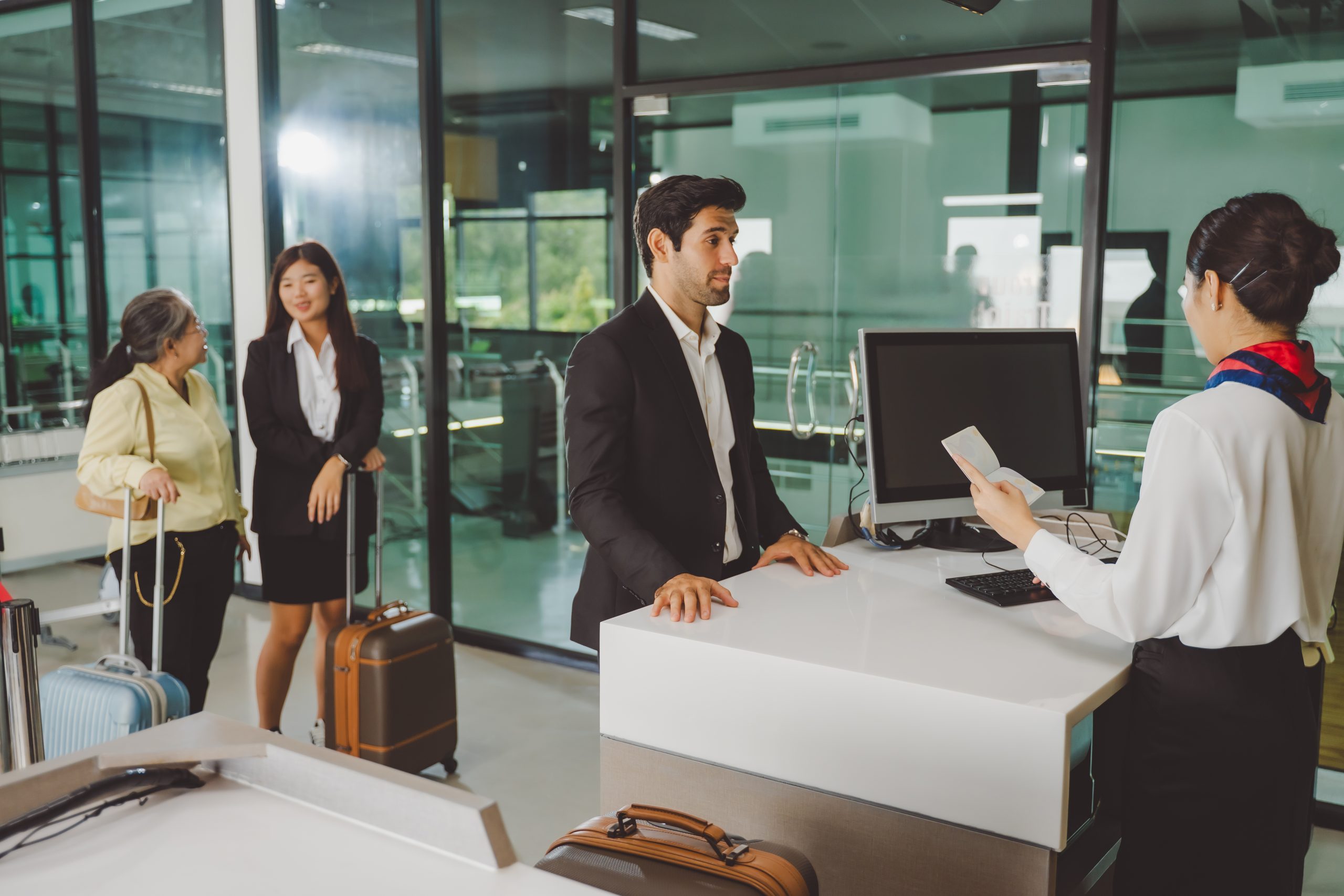
You have just landed after a long international flight. Passport control is behind you. One more step stands between you and the exit — airport customs. For most travellers, this is where confidence evaporates. What do you need to declare? Which queue do you join? What happens if you brought too much from duty-free? What are they actually looking for?
This guide answers all of it. Customs procedures are governed by law, and understanding them before you travel is not optional if you want to avoid delays, fines, or the embarrassment of having a bag opened in public. Whether you are a frequent business traveller, a family returning from holiday, or a first-time international flier, the rules are the same — but the experience does not have to be stressful.
What Is Airport Customs — and What Is It Not?
Airport customs is a government border control process that regulates what goods, currency, and items passengers bring into (and sometimes out of) a country. It is separate from passport control, which verifies your identity and immigration status.
Many travellers confuse the two, but they are distinct:
|
Passport Control / Immigration |
Customs |
| Purpose |
Verifies who you are and your right to enter |
Verifies what you are bringing in |
| Who operates it |
Border force / immigration authority |
Customs agency (e.g. HM Revenue & Customs, US CBP, EU national customs) |
| Documents checked |
Passport, visa, entry permits |
Customs declaration form, receipts, travel documents |
| Typical location |
Before baggage reclaim |
After baggage reclaim |
Understanding this distinction matters practically: passport control usually comes first, then baggage reclaim, then customs. By the time you reach the customs area, you have already collected your luggage.
The Green Channel and the Red Channel
In most international airports, the customs exit splits into two channels:
Green channel (“Nothing to Declare”) — for passengers who are not carrying goods above the duty-free allowance, no prohibited items, and no currency above the declaration threshold. Walking through the green channel is not an automatic pass. Customs officers can and do stop passengers for random checks, and being stopped in the green channel while carrying undeclared items carries significant penalties.
Red channel (“Goods to Declare”) — for passengers carrying items that exceed duty-free limits, commercial goods, large sums of currency, or anything they are unsure about. Declaring does not automatically mean paying duty — it means initiating a legal conversation with the officer. In many cases, particularly with small overages, officers have discretion and penalties may not apply to good-faith declarations.
The practical rule: if you are in any doubt, use the red channel. The consequences of incorrectly using the green channel — being stopped with undeclared goods — are significantly worse than a brief conversation at the red channel desk.
Some airports, particularly in North America, have moved to a unified customs hall where all passengers interact with an officer regardless of what they are carrying. In these cases, the green/red distinction is replaced by a digital declaration (often via customs kiosks or apps) that determines whether you are referred for further examination.
Duty-Free Allowances: What You Are Allowed to Bring
Every country sets its own limits. These allowances define what you can import without paying customs duty or tax. Exceeding them — even accidentally — can result in confiscation, duty charges, or fines.
European Union
Arriving from a non-EU country, you may bring in:
- Tobacco: 200 cigarettes, or 100 cigarillos, or 50 cigars, or 250g of tobacco (or a proportional mix)
- Alcohol: 1 litre of spirits over 22% ABV, or 2 litres of wine or beer
- Other goods: Up to €430 in value per adult (€150 for travellers under 15)
- Cash: No restriction on bringing cash into the EU, but amounts of €10,000 or more must be declared
Note that these allowances apply to arrivals from outside the EU. Travelling between EU member states, there are no customs controls (though goods must be for personal use).
The EU Entry/Exit System (EES), which became fully operational in April 2026, has changed border processing for non-EU nationals. For a full explanation of how EES affects your arrival and why professional assistance at immigration has become more valuable as a result, see our guide: The EU Entry/Exit System (EES) Explained.
United Kingdom
Post-Brexit, the UK operates its own customs regime:
- Tobacco: 200 cigarettes, or 100 cigarillos, or 50 cigars, or 250g of tobacco
- Alcohol: 1 litre of spirits over 22% ABV, or 2 litres of sparkling wine, fortified wine, or any alcoholic drink under 22% ABV, plus 4 litres of still wine and 16 litres of beer
- Other goods: Up to £390 in value
- Cash: Amounts of £10,000 or more must be declared
United States
US Customs and Border Protection (CBP) operates some of the most thorough customs screening in the world. Every arriving international passenger must complete a customs declaration — now typically done via the CBP One app or APC kiosks.
- Duty-free allowance: $800 per person (members of the same household may combine their exemptions)
- Alcohol: 1 litre duty-free, provided you are 21 or over
- Tobacco: 200 cigarettes and 100 cigars (Cuban cigars excluded)
- Cash: Amounts of $10,000 or more (including monetary instruments) must be declared on FinCEN 105
- Food: Subject to specific USDA restrictions — many fruits, vegetables, meats, and dairy products from certain countries are prohibited or require inspection
The US declaration form asks whether you are bringing in food, plants, or animal products. Always answer honestly. CBP agricultural inspectors are present at most major international arrival halls, and agricultural smuggling carries serious penalties.
Gulf States and Middle East
Customs rules in the Middle East vary significantly by country and are strictly enforced:
- Alcohol: Prohibited in Saudi Arabia, Kuwait, and Iran. Limited in the UAE (Abu Dhabi: 4 litres; Dubai: 4 litres for non-Muslims; Bahrain: 2 litres for non-Muslims)
- Medications: Many prescription drugs that are legal in Europe and North America are controlled substances in Gulf countries. Always carry a doctor’s letter and original packaging. Some medications — codeine, certain benzodiazepines, tramadol — require advance approval
- Religious and political material: Restrictions apply in several Gulf states
- Cash: Most Gulf countries require declaration of amounts over the equivalent of approximately $10,000–15,000
Asia-Pacific
Japan: Strict on agricultural products. Up to ¥200,000 in goods duty-free. Alcohol: 3 bottles of 760ml. Tobacco: 200 cigarettes. Certain medications (pseudoephedrine, ADHD treatments like Adderall, and medicines with codeine) are strictly restricted. Bringing more than a one-month supply of permitted prescription drugs requires an advance import certificate (Yunyu Kakunin-sho).
Australia: One of the most stringent biosecurity regimes in the world. Any food, plant material, animal products, or soil must be declared — even accidental traces on walking boots. Failure to declare biosecurity items attracts on-the-spot fines that regularly exceed AUD 3,700 (as they are tied to indexed penalty units) regardless of intent. Duty-free: AUD 900 per person, 2.25 litres of alcohol, 25g of tobacco (or 25 cigarettes), plus one open packet containing up to 25 cigarettes.
Singapore: Strict on chewing gum (banned for import), vaping products (illegal), and certain medications. Duty-free: SGD 500 after 48 hours overseas. Tobacco duty-free allowance was removed in 2023 — all tobacco is now dutiable.
China: Customs declaration is required from all arriving passengers. RMB 5,000 in goods duty-free. Alcohol: 1.5 litres. Tobacco: 400 cigarettes. Currency over $5,000 USD equivalent must be declared.
What You Must Always Declare
Regardless of where you are travelling, the following categories almost universally require declaration (check the specific rules for your destination):
- Cash and monetary instruments above the threshold (typically €/£/$10,000 or equivalent)
- Commercial goods — items you intend to sell, even if purchased for personal use abroad
- Gifts — if their combined value exceeds your duty-free allowance
- Prescribed medications in quantities beyond personal use, or if they contain controlled substances
- Food and agricultural products — particularly meat, dairy, fresh produce, and seeds
- Animal products and wildlife — including leather goods, ivory, shells, and fur if covered by CITES regulations
- Weapons and replicas — including certain knives, self-defence sprays, and imitation firearms
- Alcohol and tobacco — above allowance
Commonly Prohibited Items
The following are outright prohibited in many countries and will be confiscated at customs regardless of quantity or intent:
- Ivory and wildlife products — protected under the CITES convention
- Counterfeit goods — including fake designer items, even for personal use in some jurisdictions
- Certain medications — varies significantly by country; always check in advance
- Agricultural products — many countries prohibit specific items from specific regions (e.g. certain citrus fruits, pork products, live plants)
- Narcotics — including some substances that are legal in the country of departure but illegal at destination
- Pornographic material — illegal to import in several countries including UAE, Malaysia, and others
- Drones and certain electronics — some countries regulate or prohibit consumer drone importation
Customs Declarations: How They Actually Work
In most countries, the customs declaration process begins before you even land. You will typically complete a declaration on your airline’s inflight entertainment system, or via a government app (like CBP One in the US, or Australia’s Incoming Passenger Card). Some countries still use paper forms distributed on the aircraft.
The declaration asks standard questions: where you have been, what you are carrying, and whether you are bringing in restricted items. Answer every question accurately. Customs systems cross-reference flight data, passenger profiling, and declared information. Inconsistencies attract attention.
At the airport, your options are typically:
- Electronic kiosk (US, Australia, Singapore, and others): You complete your declaration digitally and receive a receipt or QR code. The system may clear you automatically or refer you to a secondary inspection.
- Manual declaration form (many countries): You hand the completed form to a customs officer as you exit.
- Channel selection (green/red): You choose the appropriate queue based on your declaration status.
Secondary inspection — being selected for a more thorough check — is a routine operational process, not an accusation. Officers may swab your bags for drug traces, X-ray your luggage again, or ask detailed questions about your travel. Stay calm, answer clearly, and cooperate fully.
Common Mistakes Travellers Make at Customs
- Not declaring gifts. A gift is a dutiable good. If the combined value of everything in your bag — including gifts — exceeds your allowance, you should declare. Wrapping does not change the category.
- Forgetting about medication. Many travellers are stopped because they carry prescription medication without a doctor’s letter or in unmarked packaging. Always carry prescription medication in its original container with a letter from your prescribing physician, ideally translated into the local language for high-restriction countries.
- Misunderstanding duty-free. Purchasing in a duty-free shop does not exempt you from import limits at your destination. Duty-free simply means you did not pay tax in the country of departure. Your destination country still applies its own import allowances.
- Forgetting food items. A piece of fruit from the aircraft meal, a sandwich purchased in the departure lounge, or a jar of preserved food as a gift — all of these are declarable in countries with strict biosecurity rules like Australia, New Zealand, and the US.
- Carrying undeclared cash. Currency declaration rules are often overlooked, particularly for business travellers carrying cash for meetings or transactions. The threshold is typically per person, not per group — but the form of money matters too (bank drafts, travellers’ cheques, and prepaid cards may be included in some jurisdictions).
- Not knowing the rules before travel. Customs regulations change. Country-specific rules — particularly around medications, food, and electronic devices — are updated regularly. Always check the official customs authority website for your destination before departure.
What Happens If You Are Stopped
Being stopped at customs, either randomly or due to a declared item, follows a standard process:
- An officer will identify themselves and explain that they are conducting an examination
- You will be asked to open your bags, or your bags will be X-rayed or scanned
- The officer may ask questions about where you have been, what you purchased, and who you are travelling with
- If a prohibited or dutiable item is found, you will be given options depending on the severity: payment of duty and tax, voluntary surrender of the item, or formal detention pending further investigation
- For minor duty overages on personal items, officers in most countries have discretion to apply common sense — particularly for good-faith, first-time infractions
- For serious violations — large quantities of prohibited goods, undeclared currency, or items linked to commercial importation — formal proceedings apply
In all cases: remain calm, be transparent, and do not argue with officers. Customs officers have broad legal powers, including the authority to detain passengers and seize goods without a court order.
Customs at Major Airports: What to Expect
London Heathrow (LHR): Separate green and red channels in all terminals. HMRC officers conduct randomised screening. Biosecurity checks are less intensive than Australia or the US but present, particularly for flights from certain regions.
Dubai (DXB): All terminals operate a unified customs hall. Dubai Customs has one of the most sophisticated scanning systems in the world — essentially every piece of checked luggage passes through automated screening. Alcohol limits are enforced; medications are a particular focus for flights from South Asia.
New York JFK: All passengers complete CBP processing, including kiosk or CBP One declaration, before exiting. Agricultural items are a major enforcement priority. Secondary inspection rates at JFK are among the highest of any major international airport.
Singapore Changi (SIN): Efficient and orderly. All passengers must complete an SG Arrival Card digitally before arrival. Customs is generally smooth for compliant passengers, but zero tolerance applies to tobacco and vaping products.
Paris CDG: Standard EU customs regime. Large airport with multiple arrival halls — customs processing varies by terminal. Non-EU arrivals at Terminal 2E face the most congestion during peak morning banks.
Bangkok Suvarnabhumi (BKK): Customs is generally efficient, but restricted medication rules are actively enforced. Several medications common in Europe and North America require advance import permits in Thailand.
How a Meet & Assist Service Helps at Customs
Customs is a legal process that every passenger must complete personally — no third party can clear customs on your behalf, and no airport service changes the rules. What a professional Meet & Assist agent changes is the experience around customs, and that difference is more significant than it might sound.
Here is what Meet & Assist does at the customs stage:
Preparation before you land. A professional agent, or the service that arranged your assistance, can advise you on what to expect at customs in your specific destination — which channel to use, whether you have anything that should be declared, and where to obtain the declaration form if one is required. Arriving informed means no surprises.
Accompaniment through the process. Your greeter meets you at the gate or at passport control and stays with you through the terminal — including the customs hall. They know the layout: which exits lead where, which counters are active, and where the queues are shortest. At airports where customs is an active bottleneck, this local knowledge matters.
Luggage coordination. One of the most common practical problems at customs — especially for passengers with multiple bags, families travelling with children, or elderly passengers — is the physical management of luggage while simultaneously handling paperwork. A Meet & Assist agent coordinates porter assistance so that someone handles your luggage from baggage reclaim through to the exit, while you focus on the declaration process.
Calm under pressure. Being stopped for secondary inspection is stressful, even when you have nothing to hide. Having a professional nearby — someone who knows the airport, who can calmly confirm logistics, who manages communication with drivers or onward transfer — removes much of that stress. You deal with the officer; the rest is handled.
For passengers with reduced mobility or language barriers. Customs declaration forms in a language you do not speak, combined with physical fatigue after a long flight, combined with managing a wheelchair or young children, is a genuinely difficult situation. An experienced agent has navigated this at their home airport hundreds of times and can provide exactly the right support without interfering with the legal process.
High-profile and privacy-sensitive travel. At airports where a Full VIP service includes private terminal processing, customs formalities may be handled within the VIP facility itself, away from the public terminal. In these cases, the entire arrival experience — from aircraft to vehicle — takes place in a controlled, private environment.
For a direct comparison of the assisted versus unassisted airport experience, see Meet & Assist vs Going It Alone: A Real Comparison.
Customs on Departure: Often Overlooked
Customs is not only an arrival process. Several countries have exit customs requirements:
- Cash export: Most countries with cash import thresholds have equivalent export restrictions. Carrying €10,000 or more out of the EU, for example, requires declaration.
- Cultural property: Purchasing antiques or art in certain countries (Egypt, Turkey, Greece, Peru) and attempting to export them without the correct permits is a serious offence — items can be confiscated at departure customs, and criminal charges apply.
- Duty-free purchases: Some countries offer VAT refunds on goods purchased during your stay. To claim these, you typically need to present the goods at a customs desk in the departure terminal before check-in, or at a dedicated tax refund counter. This requires planning — it cannot be done at the gate.
For a full guide to navigating the departure terminal — including check-in, security, and passport control — see our guide to VIP departure services.
Frequently Asked Questions
Do I have to go through customs if I am only transiting? In most cases, transit passengers who do not leave the international airside zone do not clear customs at the transit airport. However, if your transit requires you to collect and re-check your luggage (common in the US), you will clear customs at the transit point. Always confirm the transit procedure for your specific routing with your airline.
For more on what transit at a major hub involves, see What Happens During Airport Transit?
I bought goods abroad for my business. Do I declare them? Yes. Any goods purchased for commercial purposes — resale, business use, or client gifts above the personal allowance — are dutiable commercial imports, regardless of quantity. The personal duty-free allowance applies to personal use only.
What if I forget to declare something? If you have already passed through customs and then realise you should have declared something, the safest course is to return to customs and make a voluntary disclosure. In most countries, voluntary disclosure after the fact — before any enforcement action — is treated significantly more leniently than discovered non-disclosure.
Can customs hold my medication? Yes. Prescription medication that is a controlled substance in the destination country can be seized at customs, even if it is legally prescribed in your home country. Some medications are illegal outright in certain jurisdictions. Always research medication restrictions for your destination at least two weeks before departure, as obtaining advance import permits can take time.
Are there customs rules for pets? Yes — travelling with pets internationally involves a parallel customs and biosecurity process. This includes health certificates, vaccination records, microchipping requirements, and in some cases, quarantine. Requirements vary significantly by country pair (e.g. travelling with a dog from the UK to Australia involves substantially more documentation than travelling within the EU).
I am connecting through the US. Do I clear US customs? Yes. The US requires all international travellers — including those connecting to an onward international flight — to clear CBP customs and then re-check their luggage. (Note: Exceptions exist at select airports under the ITI — International-to-International — program where bags transfer automatically, though you must still clear immigration). This is a common and costly surprise for first-time US transit passengers. Always budget at least three hours for a US connection, and consider transit assistance if your connection is under four hours.
Summary
Airport customs is not an obstacle — it is a legal process that protects public health, national security, and fair trade. Understanding the rules for your specific destination before you travel takes less than fifteen minutes and saves significant stress at the airport.
The key principles are simple: know your allowances, declare when in doubt, never carry items you cannot account for, and approach customs officers with transparency and patience.
The process around customs — the baggage, the logistics, the coordination, the fatigue of a long flight — is where professional assistance makes a genuine difference. Customs itself remains your responsibility. Everything before and after it does not have to be.
Disclaimer: The information provided in this guide is for general informational purposes only and does not constitute legal, official, or professional advice. While we strive to keep the content accurate and up-to-date as of May 2026, customs regulations, duty-free allowances, and prohibited item lists vary strictly by jurisdiction and are subject to change without prior notice. We strongly advise all travellers to verify the most current requirements directly with the official customs or border protection agencies of their destination country prior to travel. The authors, publishers, and associated entities of this guide accept no liability for any travel disruptions, delays, fines, confiscation of goods, or other damages arising from reliance on the information contained herein.

 Alexander Stepanovskiy